- 29th October, 2026
- By Qudrat
10 Wall Tiling Ideas to Transform Your Kitchen and Bathroom
Most renovations start with a colour swatch and a Pinterest board. Then reality sets in: grout lines, layout patterns, tile sizing, and the fact that a wall, once tiled, is not something you casually redo in six months. Wall tiling is one of those decisions that quietly shapes how a kitchen or bathroom feels for the next decade.
That's exactly why it deserves more thought than "white subway tile, standard layout, done." The right wall tiling choice can make a small bathroom feel larger, turn a kitchen splashback into the room's focal point, and add real value if you're planning to sell. The wrong choice, or the wrong installation, does the opposite.
Below are ten wall tiling ideas worth considering, along with the practical reasoning behind each one. Whether you're renovating a single bathroom or coordinating floor and wall tiling across a full kitchen rebuild, these ideas are a useful starting point before you call in tiling services to make it real.
Why wall tiling matters more than most people realise
Wall tiling is more than a decorative choice. Kitchen and bathroom walls need to cope with moisture, heat, cleaning products, and everyday use while maintaining their appearance. Good wall tiling sits at the intersection of design and function. Tile material, size, finish, layout, and grout all influence how the finished space looks and performs.
In wet areas, it is also important to remember that tiling does not replace waterproofing. Proper substrate preparation and waterproofing should be completed where required before tiles are installed. For Melbourne homeowners, choosing experienced tilers in Melbourne is just as important as selecting the right tile. A well-chosen tile can still underperform if it is poorly installed.
Key takeaway: The best wall tiling service choices consider durability, maintenance, and installation requirements alongside aesthetics.
1. Full-height bathroom tiling
Stopping tiles halfway up a bathroom wall used to be standard practice, largely to save on cost. Full-height bathroom tiling has become the more popular option for a reason: it removes the visible seam between tile and painted wall, protects against moisture damage over a larger area, and gives the room a cleaner, more cohesive look.
It's a bigger job, but it's one of the highest-impact bathroom tiling upgrades available. It also future-proofs the room, since there's no painted section left to peel, discolour, or need repainting down the line.
2. Large-format tiles for a seamless look
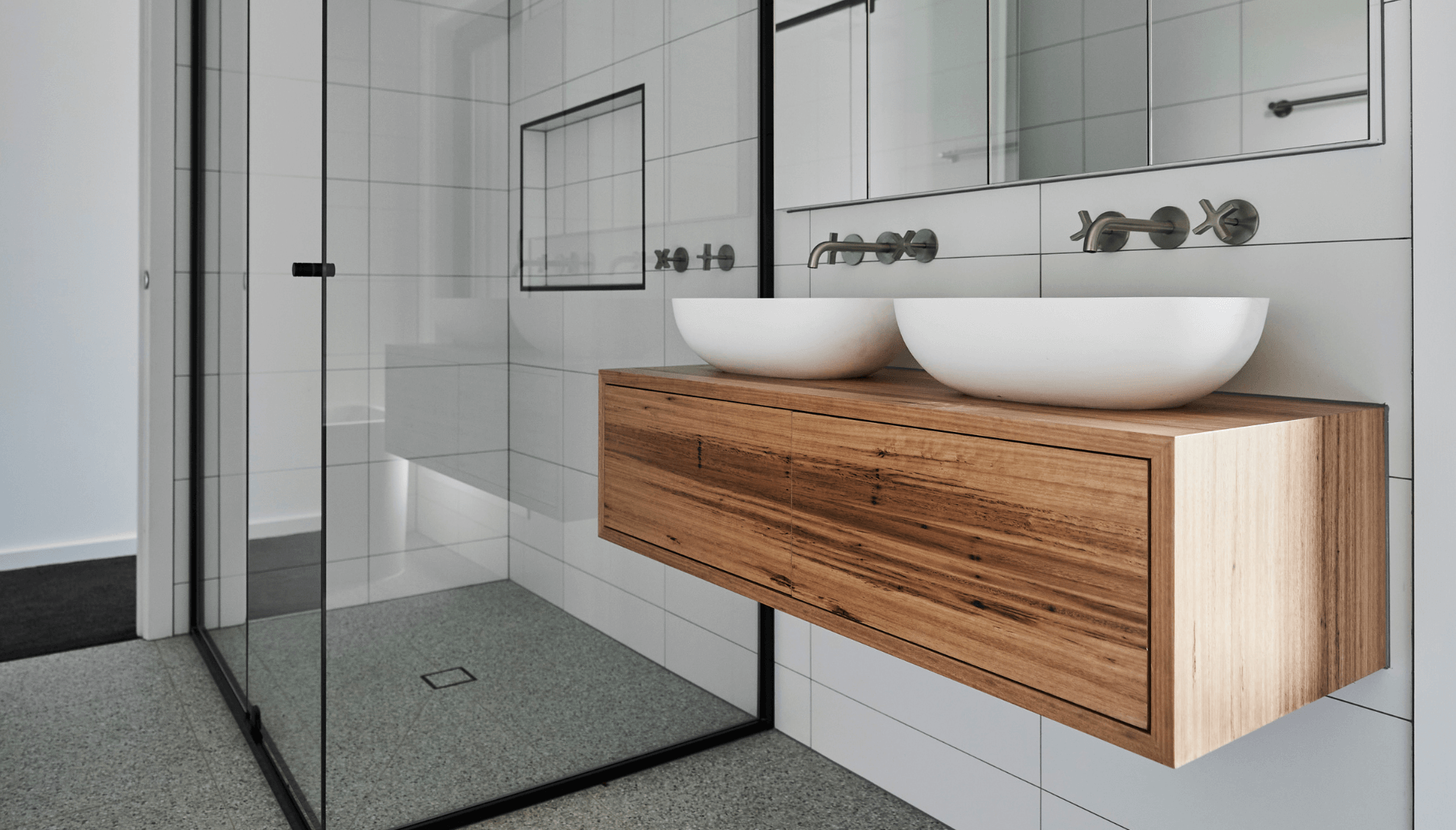
Large-format tiles mean fewer grout lines, and fewer grout lines mean less visual clutter and less surface area where grime can accumulate. In smaller bathrooms especially, large-format wall tiling can make a compact space feel noticeably more open.
The trade-off is that installation demands a level wall and a tiler who knows how to handle the size without cracking or lippage. It's worth budgeting a little extra for skilled tiling services here, since a small error in alignment is far more noticeable across a large tile than a small one.
3. Textured and 3D tiles as a feature wall
Not every wall needs to be flat. Textured tiles, whether subtly ribbed, fluted, or genuinely three-dimensional, add depth and shadow play that flat tiles simply cannot. Used on a single feature wall, they create a focal point without overwhelming the room, which is why they've become a favourite in modern kitchen tiling and bathroom design alike.
They also tend to photograph well under downlighting, making them a strong choice for spaces that double as a design statement in listing photos.
4. Herringbone and chevron patterns
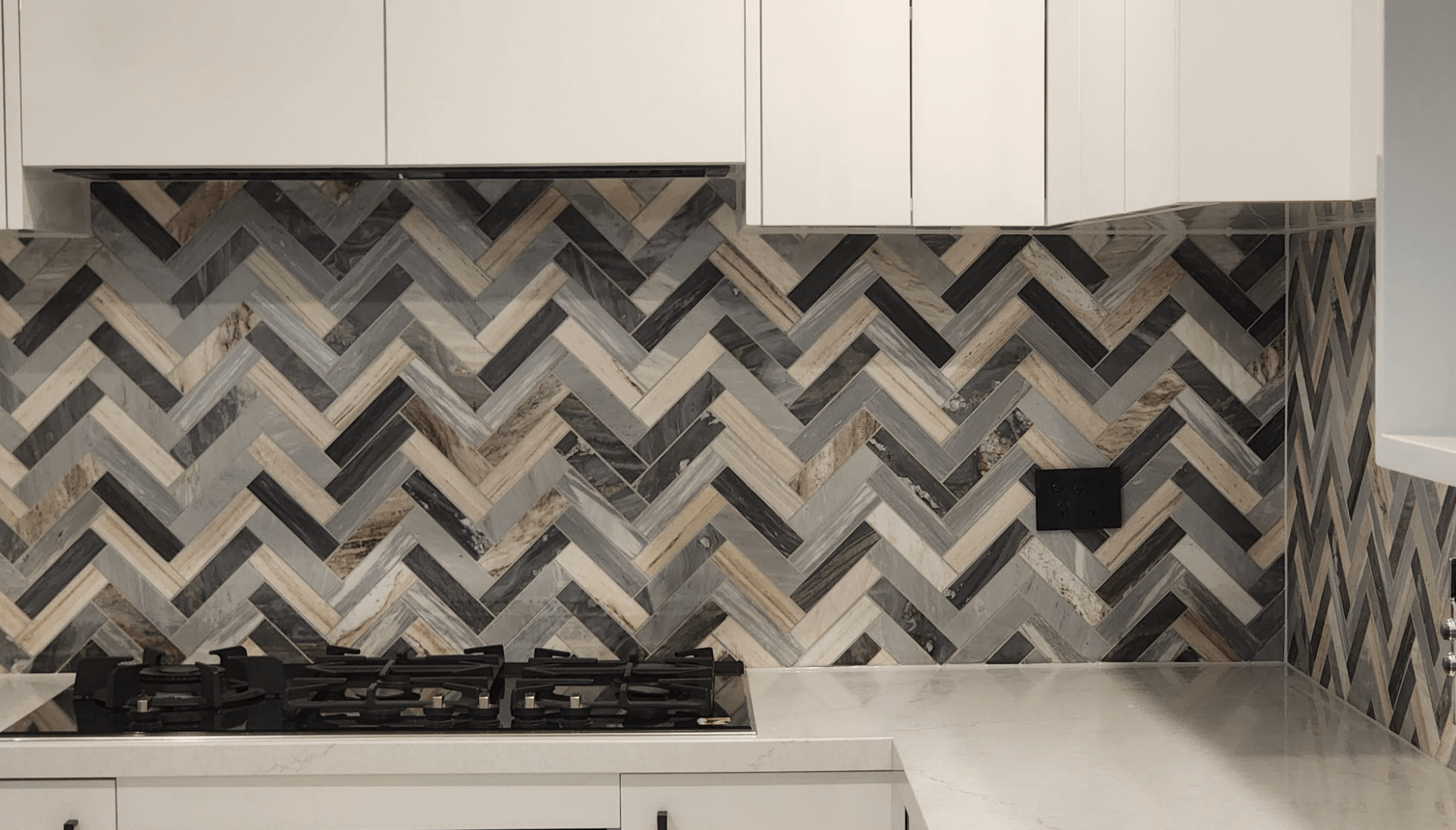
Pattern is one of the easiest ways to make standard tiles feel custom. Herringbone and chevron layouts take a simple rectangular tile and turn it into something that reads as considered and premium. These patterns work particularly well on kitchen splashbacks and shower niches, where the repeated angles catch the light differently throughout the day.
They do require more cutting and planning than a straight lay, so it's worth factoring in extra installation time and a slightly higher tile allowance for wastage.
5. Bold colour splashbacks in the kitchen
White and neutral kitchens have dominated for years, but a bold-coloured splashback is one of the fastest ways to give a kitchen personality without committing to a full colour renovation. Deep green, navy, or terracotta tiles behind a stove or sink can anchor the entire room, especially when paired with simpler cabinetry and benchtops.
Because a splashback covers a relatively small area, it's also one of the lower-cost ways to experiment with colour in kitchen tiling without the risk of overwhelming the whole room.
6. Matching floor and wall tiling for visual flow
Choosing the same tile, or closely coordinated tiles, for both floor and wall tiling creates a sense of continuity that makes bathrooms and kitchens feel larger and more intentional. This approach removes the visual stop point that separate tile choices create, which is particularly effective in smaller wet rooms and ensuites.
It also simplifies the buying process, since ordering one tile family for both floor tiling and wall surfaces cuts down on decision fatigue and reduces the risk of mismatched batches.
7. Mosaic accents in shower niches and borders
Mosaic tiles are labour-intensive to install, which is exactly why they read as a premium touch when used strategically. Rather than tiling an entire wall in mosaic, using it inside a shower niche or as a border strip against a larger-format tile gives you the detail and texture without the cost or maintenance of a full mosaic wall.
Mosaic accents are also a practical way to introduce a bolder colour or finish, since the smaller footprint keeps the overall look balanced rather than busy.
8. Matte finishes over high-gloss
Gloss tiles have their place, but matte finishes have become increasingly popular for good reason. They hide water spots and soap scum far better than gloss, they photograph beautifully in natural light, and they lend a softer, more contemporary feel to both kitchen and bathroom tiling.
For busy households, the lower-maintenance appeal alone is worth considering. The one trade-off is that matte surfaces can be slightly harder to wipe clean of grease in high-splash kitchen zones, so it is worth checking the tile's specific finish rating before committing.
9. Vertical stack bond for a taller feel
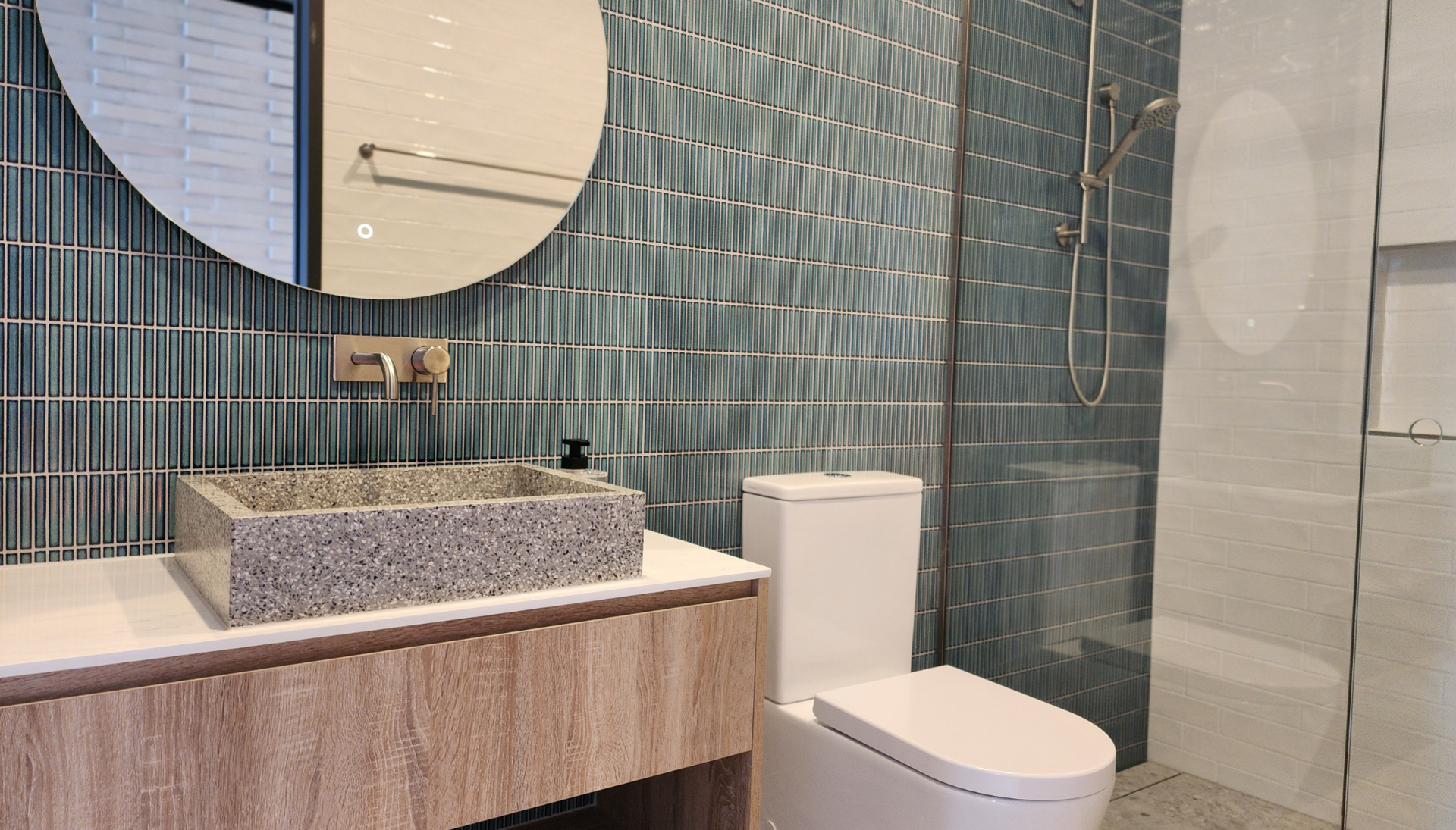
The direction a tile is laid changes how a room reads, even before pattern or colour comes into it. A vertical stack bond, where tiles are laid in straight vertical columns rather than the traditional brick-offset pattern, draws the eye upward. In bathrooms with lower ceilings, this simple layout choice can make a real difference to how tall and open the space feels.
It is a good option when you want a clean, contemporary look without introducing pattern or extra colour into the room.
10. Two-tone tiling to zone a space
Using two different tiles, split horizontally or by function, is a practical way to zone an open kitchen or a combined bathroom and laundry. A darker, more durable tile on the lower half with a lighter tile above draws a clear visual line while also letting you use tougher materials where they are needed most, like around a bath or behind a stove.
A simple strip of trim or a contrasting grout line at the transition point is often all that is needed to make the split look deliberate rather than accidental.
Key takeaway: The best wall tiling ideas balance a strong visual concept with practical decisions about layout, finish, and durability, not just tile selection.
Why professional installation matters as much as the idea
Even the best wall tiling idea can fall short if installation is rushed or poorly planned. Professional tiling services involve far more than placing tiles on a wall. An experienced tiler assesses the substrate, plans the layout, considers where cuts will fall, and ensures the appropriate preparation is completed before a single tile goes up.
In wet areas, waterproofing is particularly important. Uneven grout lines, poorly positioned cuts, or inadequate preparation can affect both the appearance and long-term performance of the finished surface.
For Melbourne homeowners undertaking kitchen tiling or bathroom tiling renovations consistently find that the quality of the tiler makes as much difference to the outcome as the tile itself. Quality floor tiling and wall tiling both require precise installation, and experienced tilers in Melbourne understand how to combine that precision with practical design considerations. A good installation looks intentional from every angle, including around corners, fixtures, niches, and edges.
Bringing these ideas into your renovation
None of these ten ideas need to be used in isolation. A full-height bathroom in matte, large-format tile with a mosaic-lined shower niche is a genuinely common and effective combination. A kitchen with a bold herringbone splashback and matching floor tiling in a neutral tone is another. The right combination depends on the size of the room, the amount of natural light, and how the space is actually used day to day.
If you are planning a kitchen or bathroom renovation and want to talk through which of these wall tiling ideas would work for your space, get in touch with Unique Tiling Concepts. Their team can walk the site, talk through layout options, and give you a realistic view of cost and timeline before any tiles are ordered. You can also explore their bathroom tiling services and kitchen tiling services to get a clearer picture of what professional tiling services involve from start to finish.